Get a quote

Free toolSafety glass checker

Where Is Safety Glass Needed?

Pick where the glass goes (shower, door, low window, balustrade, roof, shopfront) and see whether safety glass is normally required, which type and what thickness.

Get a free quote

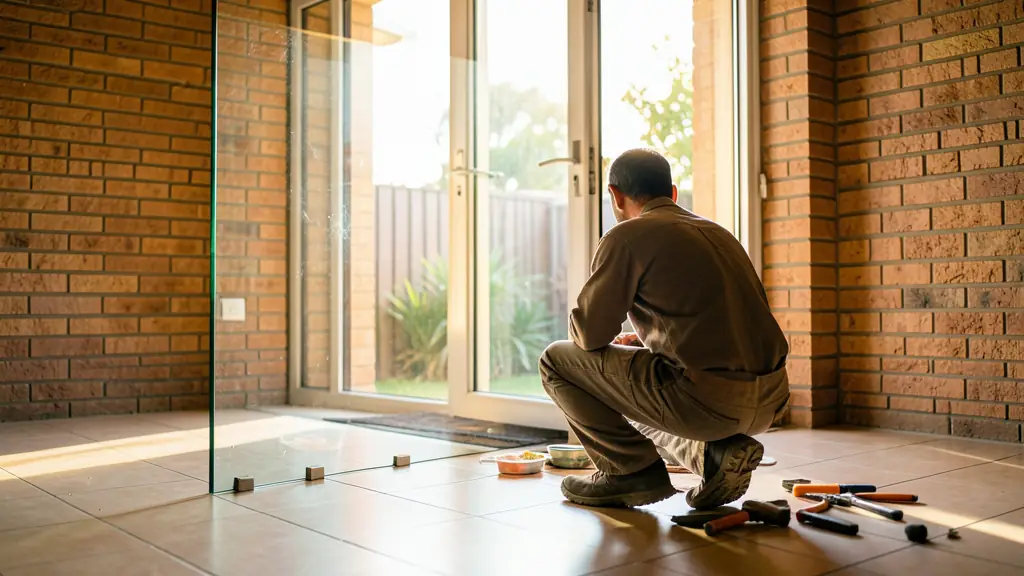
A glazier crouching to check a safety glass door panel in a bright entrance hall of a family home

In South Africa, glass in places where people can walk into it, fall against it or be hit by it when it breaks must be safety glass: toughened, laminated, or both. The building regulations (SANS 10400-N, with SANS 10137 for selecting glass) set out where. Pick the place you are glazing to see what is normally needed. Your glazier confirms the final choice for your opening.

Where does the glass go?

Safety glass: Yes

Shower or bath screen

Glass
Toughened safety glass
Typical thickness
6–10 mm (8–10 mm frameless)

Glass in shower enclosures and bath screens must be safety glass. Frameless doors are usually 10 mm toughened on heavy-duty hinges.

Frameless Shower Doors: guide and quotes

A guide based on SANS 10400-N and common practice, not a compliance certificate. Your glazier or architect confirms what each opening needs.

Get a free glass quote

Tell us what you need and where. A glass supplier or glazier who works in your area quotes you directly.

Request no.CL-23514

Cutting list (optional)

Know the sizes? List each pane in millimetres. Toughened glass can't be cut afterwards, so sizes help the glazier quote, but they will still measure up before ordering.

#Width (mm)Height (mm)Qty
1××
2××
3××
0 m²no panes yet
Thickness, if you know it
Tick what applies (optional)

Free and no obligation. By sending you agree that we may share your request with a suitable supplier or glazier. See our privacy policy.

Toughened or laminated?

Toughened (tempered) glass is about four to five times stronger than ordinary glass and breaks into small, blunt cubes. It suits showers, doors, table tops and most low-level glass.

Laminated glass is two or more panes bonded with a plastic interlayer. When it breaks the pieces stay stuck to the interlayer and the pane stays in the frame. It is the choice where falling glass is the danger (roofs, skylights, overhead glass) or where the glass is a barrier (balustrades held only at the base, glass floors), and it slows down break-ins.

For the highest risks the two are combined: laminated toughened glass.

Look for the safety mark

Every pane of safety glass that the regulations require should carry a permanent mark, usually etched or sandblasted in a corner, showing the maker or supplier, the type of glass and the standard it meets (SANS 1263 for safety glass). A pane without the mark cannot be shown to be safety glass, so building inspectors and insurers may not accept it. Ask your glazier to leave the mark visible.

Replacing old glass

Many older houses have ordinary annealed glass in doors, sidelights and low windows, fitted before the current rules. When you replace a broken pane in one of these places, replace it with safety glass. It costs a little more and removes the most common cause of serious glass injuries at home: people, often children, walking or falling into a door or low pane.

Frequently asked questions

Is safety glass required in shower doors?
Yes. Glass in shower enclosures and bath screens must be safety glass, in practice toughened glass of 6–10 mm, carrying the permanent safety mark.
Do windows need safety glass?
Not all of them. Ordinary windows well above floor level can use annealed glass. Panes close to the floor, glass in and beside doors, large panes people could mistake for an opening, and glass in shopfronts normally need safety glass. Your glazier checks each opening.
Which is safer, toughened or laminated glass?
It depends on the risk. Toughened glass is stronger and breaks into blunt pieces; laminated glass holds together and stays in place when broken. Overhead glass and barriers are usually laminated; showers and doors are usually toughened.
Can I tell if my glass is toughened?
Look for the etched safety mark in a corner. Through polarised sunglasses toughened glass often shows a pattern of dark patches or stripes from the toughening process. If there is no mark, treat the glass as ordinary glass.

Guides and quotes for this job

More glass calculators

Get a free quote