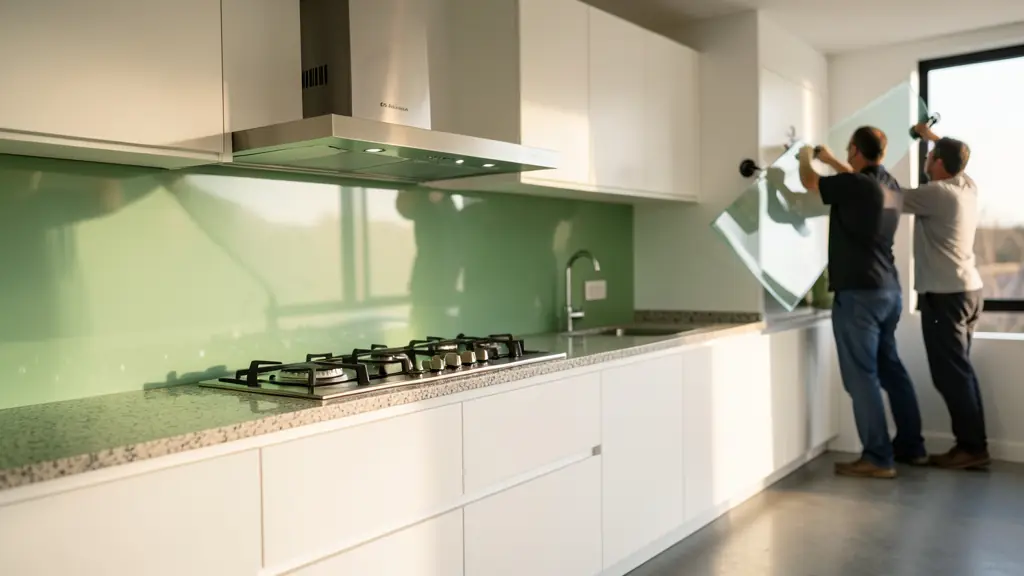
A glass splashback gives your kitchen a smooth, easy-clean wall behind the hob and basin. It has no grout lines to scrub. TemperedGlass.co.za is a free quote service. You fill in one form and we pass your request to independent glaziers and glass suppliers in your area, who quote you directly. We do not sell, make or fit glass ourselves. There is no fee and no obligation, so you can compare a kitchen glass splashback quote from more than one glazier.
Types of glass splashbacks
Most splashbacks are made from 6 mm tempered glass, cut to fit around sockets and the edge of the counter. The look depends on how the colour is applied.
- Back-painted glass: the colour is applied to the back, giving a deep, flat finish in any shade you choose.
- Clear glass: fitted over a painted or tiled wall so the wall colour shows through.
- Printed or patterned glass: a design fired onto the glass.
- Low-iron glass: less green tint, so whites look cleaner.
Heat, safety and the hob
A tempered glass kitchen backsplash handles heat much better than ordinary glass. This matters for a splashback behind a gas hob. Ask your glazier about the gap needed between the flames and the glass, and check the hob maker's instructions.
Tempered glass cannot be cut or drilled after toughening. Socket cut-outs, switches and corners are done first, so the glazier must template the wall carefully. Check the safety mark once it is fitted.
Wipe the glass with a soft cloth and a non-abrasive cleaner. Grease from cooking comes off easily, which is one reason many people choose glass over tiles with grout lines.
Buying and fitting notes
Splashbacks are usually fixed with a strong adhesive and a silicone seal. The wall must be flat, dry and clean.
- Take down loose tiles and fill gaps before the glazier templates.
- Bring a paint swatch or sample so the glass colour matches.
- Ask if the install happens after the counter is fitted.
- Plan for sockets, rails and extractor positions early.
For a large kitchen, the glass may be fitted in two or more panels. A good glazier places the joins where they are least visible. Ask whether the glass will be fitted before or after the counter, and who handles any gaps along the edges.
What affects your quote
We never give prices here. A glazier will look at:
- The width and height of the area to cover.
- The number of cut-outs for sockets and switches.
- The colour, printing or low-iron option you choose.
- Whether old tiles must be removed first.
- Travel distance and the lead time for toughening.
A sketch with measurements, plus a photo of the wall, helps you receive quotes you can compare.
Comparing quotes for glass splashbacks
The lowest figure is not always the best deal. When your quotes arrive, check:
- Glass: the type, thickness and finish allowed for, and that it carries the safety mark where it must.
- Hardware: the hinges, clamps, channels, spigots or frames included, and their finish and grade.
- Measuring and lead time: who measures, how long the toughened glass takes to arrive, and when it can be fitted.
- Guarantee and terms: any workmanship guarantee, deposit, payment stages, removal of old glass and how long the price holds.
What to include in your request
- Measure the width and height to cover.
- List the sockets and switches on the wall.
- Give a paint swatch or colour name.
- Say whether the hob is gas or electric.
- Mention your town and a photo of the wall.